Unheard Scream
Overview
🔗 Play Unheard Scream on Itch.io - 60,000+ Downloads!
Unheard Scream is a first-person co-op puzzle horror game where players assume the role of urban explorers trapped in a sealed subway station. Hunted by a horrifying, sound-sensitive creature, players must split up, rely on limited communication via radio booths, and collaborate to solve interconnected puzzles to escape.
I pitched the initial concept for the game and served as a core designer throughout its development. Working closely with the programming and art teams, my primary focus was designing the core game mechanics, balancing the monster's behavior, and crafting an immersive, data-driven level layout. I am incredibly proud that our team's hard work resulted in a successful release with over 60,000 downloads.
My Responsibilities & Impact
- Core Mechanics & Edge Case Logic: I designed the primary game mechanics, including the communication radio booths and the player healing system. Because these mechanics involved complex player-to-player interactions, I wrote comprehensive visual documentation covering all potential edge cases to ensure our programmer had clear, bug-free logic to implement.
- Asymmetric Co-Op Puzzle Design: Collaborating closely with our Gameplay Director, Rebecca, I designed the game's core asymmetric puzzles. I specifically engineered these to require verbal communication between isolated players and implemented randomized data variables to guarantee high replayability across multiple playthroughs.
- Monster Balancing & Waypointing: I designed the monster's general behavior loop and balanced its attributes (speed, size, sight/hearing range). Additionally, I manually placed all waypoints for its patrolling state and strategically distributed hiding spots throughout the environment to create consistent tension.
- Data-Driven Level Iteration: I collaborated with our programmer to build a custom player-tracking system. This allowed me to analyze exactly which corridors players favored, where they got lost walking in circles, and which areas were completely ignored. I then used this data to iterate on the map layout, adjusting sightlines and environmental cues to naturally guide players.
Development Deep Dive
1. Visual Documentation & Game Architecture
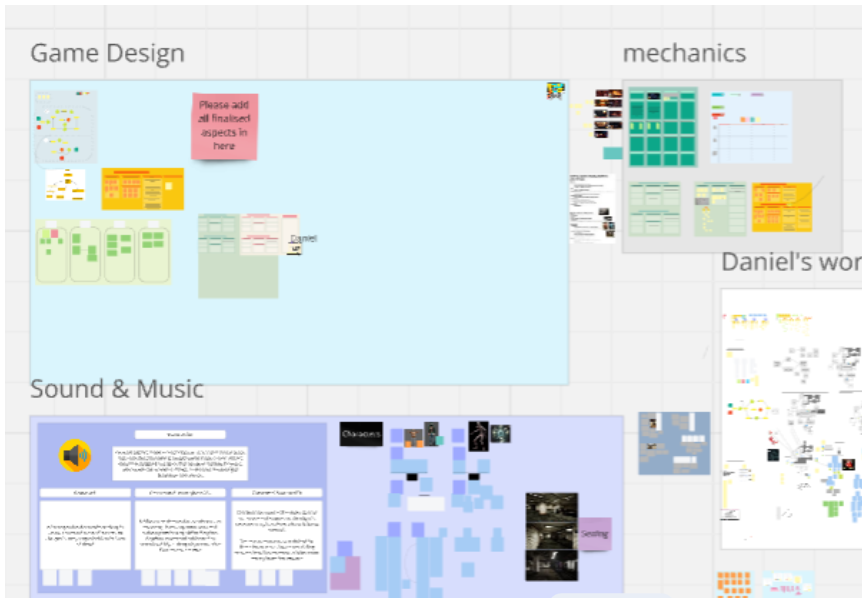
- The Process: To keep our small team agile, I maintained all Game and Level Design Documentation visually in Miro. This allowed me to clearly map out complex mechanic edge cases (e.g., "What happens if Player 1 calls Player 2, but Player 3 is already calling Player 1?") and deliver actionable logic to the programming team without burying them in heavy text documents.
2. Designing High-Stakes, Asymmetric Puzzles
- The Challenge: We needed a puzzle that forced players to truly cooperate without just being a simple "press two buttons at the same time" mechanic. It also needed to remain challenging and replayable across multiple playthroughs.
- The Execution: I co-designed the primary puzzle system with our Gameplay Director. We separated the players—giving one the input mechanism and the other the randomized solution data.
- The Result: Because the monster hunts by sound, forcing players to use the in-game radio to communicate randomized puzzle solutions created a massive, systemic tension. Every time players spoke to solve the puzzle, they took a calculated risk of drawing the monster to their location, perfectly blending our puzzle mechanics with the core horror loop.
3. Balancing the Monster & Tension
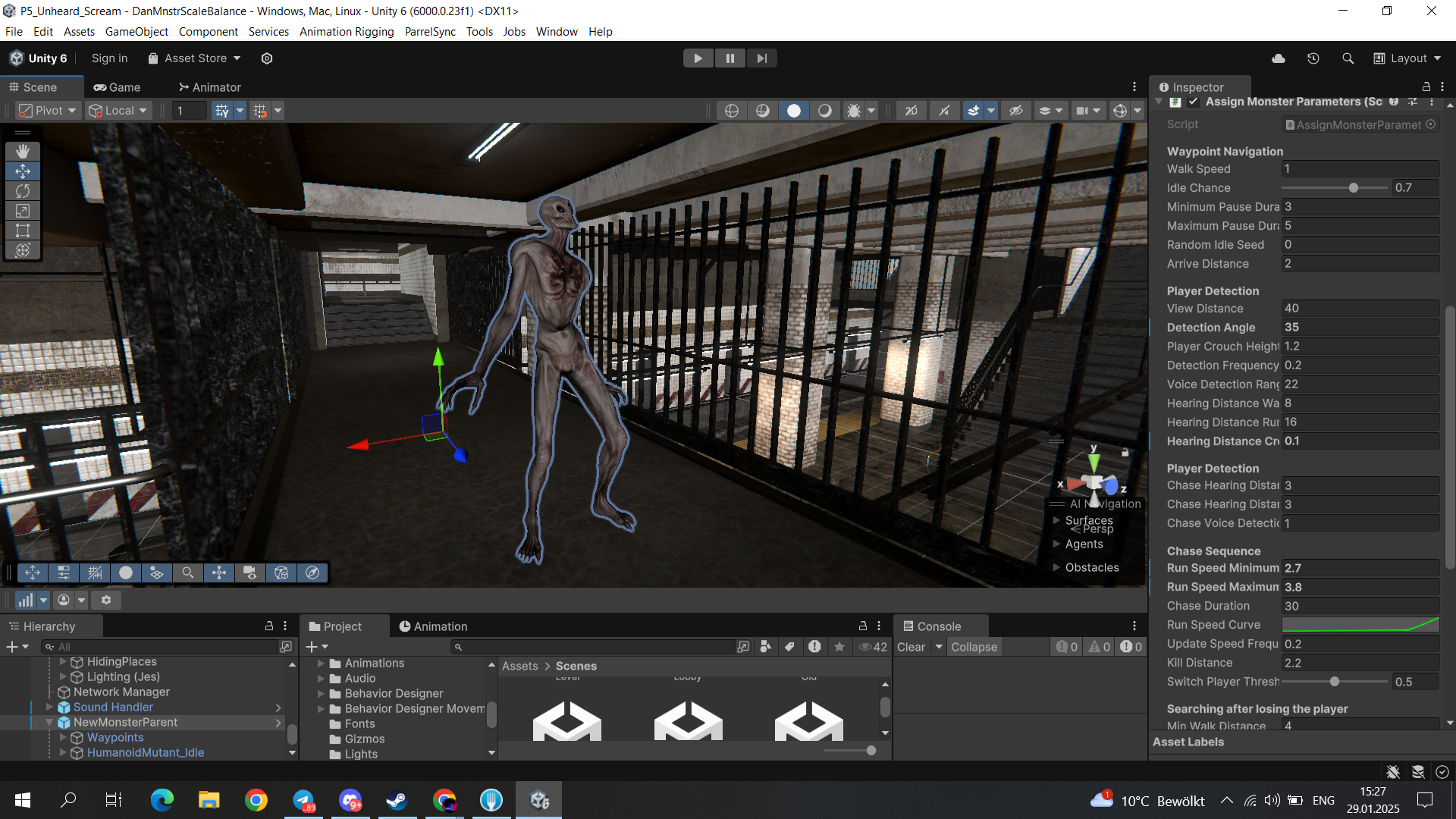
- The Execution: - A horror game lives or dies on its monster. I constantly balanced the creature's sight, hearing ranges, and movement speed against the player's abilities. By carefully placing patrol waypoints and testing hiding spot distributions in the greybox phase, I ensured the monster felt like an ever-present, terrifying threat without feeling unfair.
4. Data-Driven Level Design (Path Tracking)
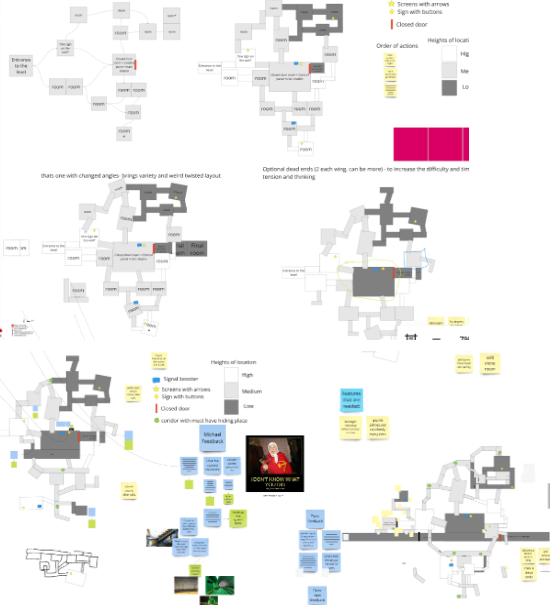
Steps and iterations of the Level Design. From the Flow Map to the final result.
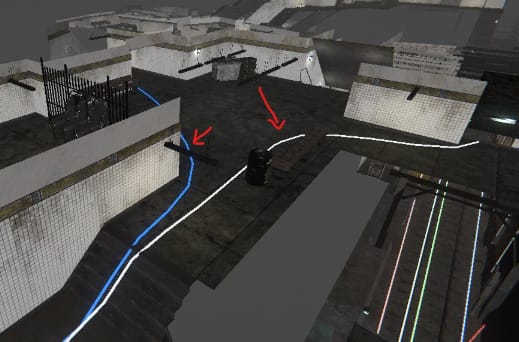
Path-Tracking System for level design iterations.
- The Challenge: In a horror/exploration game, players can easily get frustrated if the level layout doesn't naturally guide them. However, a moderate level of confusion in the maze was intended in order to increase the horror element. We needed to know how exactly playtesters were navigating the complex subway environment.
- The Solution: I requested a custom tracking tool from our programmer that recorded every player's path through the level. By analyzing this data, I identified severe navigational bottlenecks—specifically where players were walking in circles or completely missing vital areas.
- The Result: I iterated heavily on the greybox level design based on this data, adjusting level layout, lighting, environmental landmarks, and corridor shapes. This drastically reduced frustration and ensured the environment felt intuitive enough before we committed to final 3D art assets.